Top 3 In-Demand Certifications for 2025: Boost Your Career Fast

The most impactful in-demand certifications 2025 for rapid career advancement include specialized programs in Artificial Intelligence, Cloud Computing, and Cybersecurity, each offering significant professional growth opportunities within a short timeframe.
In today’s rapidly evolving job market, staying ahead means continuously acquiring new skills. For those looking to significantly boost their career trajectory in a short period, focusing on the right certifications is paramount. This article explores the top 3 in-demand certifications for 2025, offering a clear path to career advancement in under six months.
Understanding the 2025 Job Market Landscape
The year 2025 is poised to witness a continued acceleration of technological advancements, reshaping industries and creating new demands for specialized expertise. Employers are increasingly seeking candidates who not only possess foundational knowledge but also hold verifiable credentials in cutting-edge areas. This shift underscores the importance of strategic professional development, particularly through targeted certification programs.
Navigating this dynamic landscape requires a keen understanding of which skills will offer the most significant return on investment in terms of career growth and earning potential. The emphasis is on practical, immediately applicable skills that address current and future business challenges. Certifications, unlike traditional degrees, are often designed to provide these specific competencies in a condensed timeframe, making them ideal for professionals seeking quick career boosts.
Emerging Technologies and Skill Gaps
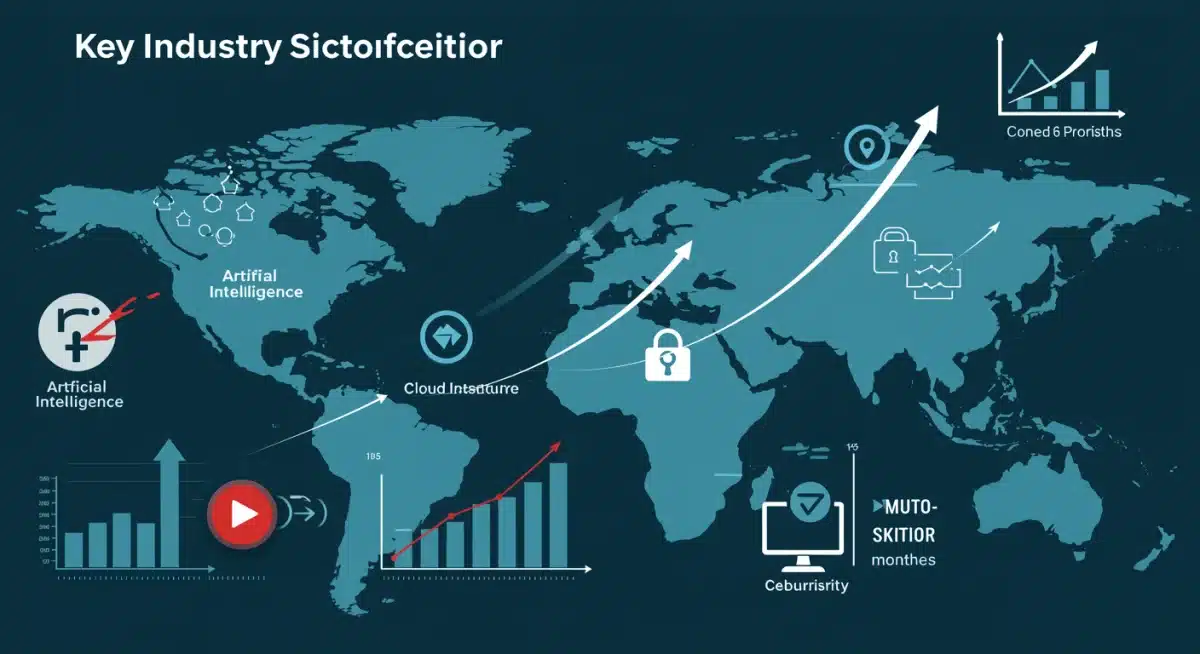
Several technological trends are driving the demand for specialized skills. Artificial intelligence and machine learning continue to expand their footprint across all sectors, from healthcare to finance, creating a pressing need for professionals who can develop, implement, and manage AI solutions. Similarly, the pervasive adoption of cloud computing platforms necessitates experts capable of designing, securing, and optimizing cloud infrastructures. Cybersecurity, of course, remains a critical concern, with the constant threat of data breaches fueling an insatiable demand for skilled defenders.
- Artificial Intelligence: Driving automation, data analysis, and predictive modeling.
- Cloud Computing: Essential for scalable infrastructure, remote work, and digital transformation.
- Cybersecurity: Protecting digital assets, ensuring data privacy, and maintaining operational integrity.
These areas represent not just temporary trends but fundamental shifts in how businesses operate. The skill gaps in these fields are significant, presenting a golden opportunity for individuals who invest in relevant certifications. By focusing on these high-growth areas, professionals can position themselves as invaluable assets in the evolving workforce.
In conclusion, the 2025 job market will heavily favor those with demonstrable expertise in key technological domains. Certifications provide a structured and efficient way to acquire this expertise, directly addressing the prevalent skill gaps and preparing individuals for the challenges and opportunities ahead. Understanding these market dynamics is the first step towards making informed career decisions.
Certification 1: Artificial Intelligence & Machine Learning Specialist
The field of Artificial Intelligence (AI) and Machine Learning (ML) is not just a buzzword; it’s a transformative force reshaping every industry. As businesses increasingly rely on data-driven insights, automation, and predictive analytics, the demand for skilled AI/ML specialists has skyrocketed. Obtaining a recognized certification in this domain can open doors to high-paying roles such as AI Engineer, Machine Learning Scientist, or Data Scientist with a specialization in AI/ML.
These certifications typically cover foundational concepts in AI, various machine learning algorithms, deep learning, natural language processing, and computer vision. They often involve hands-on projects, ensuring that candidates gain practical experience in building and deploying AI models. The curriculum is designed to be intensive yet focused, allowing dedicated individuals to complete the program and earn their credential within six months.
Why AI/ML Certification Now?
The urgency for AI/ML expertise stems from several factors. The rapid proliferation of big data requires sophisticated tools and techniques for analysis, which AI and ML provide. Furthermore, the drive for operational efficiency and innovative product development across sectors like healthcare, finance, and manufacturing relies heavily on AI-powered solutions. Companies are actively seeking individuals who can translate complex data into actionable strategies and build intelligent systems.
- High Demand: Companies are struggling to find qualified AI/ML talent.
- Innovation Driver: AI is at the forefront of technological advancement.
- Lucrative Careers: AI/ML roles command some of the highest salaries in tech.
For instance, an AI/ML specialist might work on developing recommendation engines for e-commerce, building diagnostic tools in medicine, or optimizing logistics in supply chains. The applications are virtually limitless, making this a highly versatile and future-proof skill set. The ability to understand, apply, and innovate with AI/ML is becoming a core competency for many forward-thinking organizations.
In summary, an Artificial Intelligence & Machine Learning Specialist certification offers a direct route to a highly sought-after and impactful career. It equips professionals with the tools to innovate, solve complex problems, and contribute significantly to the digital transformation efforts of businesses. This certification is an excellent choice for those looking to make a substantial career leap in a short timeframe.
Certification 2: Cloud Solutions Architect (AWS, Azure, or Google Cloud)
Cloud computing has become the backbone of modern IT infrastructure. Virtually every organization, from startups to multinational corporations, leverages cloud services for scalability, flexibility, and cost-efficiency. This pervasive adoption has created an immense demand for Cloud Solutions Architects—professionals who can design, implement, and manage robust, secure, and performant cloud environments. Certifications from major cloud providers like Amazon Web Services (AWS), Microsoft Azure, and Google Cloud Platform (GCP) are highly valued in the industry.
These certifications validate a professional’s ability to architect and deploy distributed systems on their respective cloud platforms. They cover a broad range of topics, including compute, storage, networking, databases, security, and cost optimization within the cloud ecosystem. While each platform has its nuances, the core principles of cloud architecture remain consistent, making a certification in one a strong foundation for understanding others. Many programs are structured to allow completion within a few months of focused study and practical application.
The Critical Role of Cloud Architects
Cloud Solutions Architects play a pivotal role in an organization’s digital transformation journey. They are responsible for translating business requirements into technical cloud solutions, ensuring that applications and data are hosted efficiently and securely. Their expertise is crucial for optimizing cloud spending, designing disaster recovery strategies, and integrating various cloud services to create seamless operational workflows. Without skilled architects, companies risk inefficient cloud deployments, security vulnerabilities, and escalating costs.
- Infrastructure Modernization: Guiding companies in migrating to and optimizing cloud environments.
- Scalability and Reliability: Designing systems that can handle fluctuating demands and ensure continuous availability.
- Security Best Practices: Implementing robust security measures within cloud architectures.
For example, an AWS Certified Solutions Architect might design a serverless application architecture for a high-traffic website, while an Azure Solutions Architect could be responsible for integrating on-premise data centers with Azure cloud services. The ability to navigate these complex environments and build resilient solutions is what makes these certifications so valuable in 2025.
In essence, a Cloud Solutions Architect certification is a gateway to a career that is central to modern business operations. It provides the skills to manage complex cloud infrastructures, ensuring businesses can leverage the full potential of cloud technology. This certification is ideal for IT professionals looking to specialize in a high-growth area with significant career prospects.
Certification 3: Certified Information Systems Security Professional (CISSP)
As cyber threats grow in sophistication and frequency, the role of cybersecurity professionals becomes increasingly critical. The Certified Information Systems Security Professional (CISSP) certification is widely regarded as one of the most prestigious and globally recognized credentials in the cybersecurity field. It validates an individual’s expertise in designing, implementing, and managing best-in-class cybersecurity programs, making it invaluable for senior-level security roles.
Unlike entry-level certifications, CISSP is geared towards experienced security practitioners and covers a broad spectrum of security domains, known as the Common Body of Knowledge (CBK). These domains include security and risk management, asset security, security architecture and engineering, communication and network security, identity and access management, security assessment and testing, security operations, and software development security. While requiring prior experience, dedicated study can prepare candidates for the exam within a six-month window.
Why CISSP is Essential for 2025
With organizations facing constant pressure to protect sensitive data and comply with stringent regulations (like GDPR and CCPA), CISSP-certified professionals are in exceptionally high demand. They are the architects of an organization’s security posture, responsible for strategic planning, policy development, and incident response. The certification demonstrates a comprehensive understanding of information security, making holders trusted advisors in risk management and compliance.
- Global Recognition: A universally respected credential in cybersecurity.
- Comprehensive Knowledge: Covers all critical aspects of information security.
- Leadership Roles: Prepares individuals for senior management and executive security positions.
For example, a CISSP holder might lead a security audit for a financial institution, develop a robust incident response plan for a tech company, or advise on data privacy regulations for a healthcare provider. Their ability to understand both the technical and managerial aspects of security makes them indispensable. The certification signifies a deep commitment to the profession and a proven capability to handle complex security challenges.
In conclusion, the CISSP certification is a benchmark for excellence in cybersecurity, offering unparalleled career opportunities for seasoned professionals. It provides a holistic understanding of information security, preparing individuals to lead and manage critical security initiatives. For those with relevant experience seeking to solidify their expertise and advance into leadership roles, CISSP is an investment that yields significant returns.
Comparing Certification Paths: Which One is Right for You?
Choosing the right certification path depends heavily on your existing background, career aspirations, and the specific industry you wish to impact. While all three certifications—AI/ML Specialist, Cloud Solutions Architect, and CISSP—are highly in-demand for 2025, they cater to different professional profiles and skill sets. A careful comparison can help you make an informed decision that aligns with your personal and professional goals.
Consider your current strengths and interests. If you have a strong analytical mind, enjoy working with data, and are fascinated by algorithms and predictive modeling, an AI/ML certification might be your ideal choice. This path is perfect for those who want to be at the forefront of innovation and develop intelligent systems. It requires a solid foundation in mathematics, statistics, and programming, typically Python.
Factors to Consider for Your Certification Choice
- Prior Experience: Do you have existing experience in IT infrastructure, software development, or security?
- Career Goals: Are you aiming for a technical specialist role, an architectural design position, or a security leadership role?
- Industry Focus: Which industry excites you most—tech, finance, healthcare, or government?
- Time Commitment: While all aim for under six months, some demand more intensive study than others.
If your expertise lies in IT infrastructure, network administration, or systems engineering, a Cloud Solutions Architect certification could be a natural progression. This path is for those who enjoy designing scalable systems, managing complex environments, and optimizing cloud resources. Familiarity with operating systems, networking concepts, and virtualization will be highly beneficial here. You will be responsible for the very foundation of digital operations.
Conversely, if you have a background in IT security, network security, or governance, risk, and compliance (GRC), pursuing the CISSP certification is likely the most impactful move. This is a leadership-oriented certification, best suited for professionals who want to shape an organization’s security strategy and manage security teams. It requires a minimum of five years of cumulative paid work experience in two or more of the eight CISSP domains.
Ultimately, the best certification is the one that leverages your existing skills, excites your passion, and propels you towards your desired career destination. Each of these certifications offers a unique and valuable skill set, ensuring that dedicated professionals can find a path to significant career growth in 2025 and beyond. Evaluate these factors carefully to choose the credential that will unlock your maximum potential.
Maximizing Your Certification Investment in Under 6 Months
Earning a valuable certification in under six months requires a strategic approach, disciplined effort, and effective resource utilization. It’s not just about passing an exam; it’s about acquiring and demonstrating practical skills that employers are actively seeking. Maximizing your investment means focusing on both theoretical knowledge and hands-on application, ensuring you are job-ready upon completion.
Start by creating a realistic study plan. Break down the certification content into manageable modules and allocate specific times for study each week. Utilize a variety of learning resources, including official study guides, online courses, practice exams, and virtual labs. Active learning, such as explaining concepts to others or working through practical scenarios, significantly enhances retention and understanding.
Effective Study Strategies for Rapid Certification
- Structured Study Plan: Allocate dedicated time slots daily or weekly for focused learning.
- Diverse Resources: Combine official guides, video tutorials, and practice questions.
- Hands-on Practice: Utilize labs and real-world projects to solidify theoretical knowledge.
- Community Engagement: Join study groups or online forums for peer support and shared insights.
- Practice Exams: Regularly assess your knowledge and identify areas needing improvement.
Crucially, hands-on experience is often as important as theoretical knowledge. For AI/ML, this means working on data science projects using relevant libraries and frameworks. For cloud certifications, it involves setting up and managing services on the actual cloud platforms. For CISSP, it means relating concepts to your professional experience and thinking critically about security scenarios. Practical application not only reinforces learning but also provides tangible evidence of your capabilities to potential employers.
Networking also plays a vital role. Connect with other professionals in your chosen field, attend webinars, and participate in online communities. These interactions can provide valuable insights, mentorship opportunities, and even lead to job opportunities. A certification is a powerful credential, but the network you build around it can amplify its impact significantly.
By combining a structured study plan, hands-on practice, and strategic networking, you can effectively maximize your certification investment. This holistic approach ensures that you not only pass the exam but also develop the practical skills and professional connections necessary for rapid career advancement within the ambitious six-month timeframe. It’s about building a foundation for long-term success.
The Long-Term Impact of Strategic Certifications
Investing in strategic certifications in 2025 extends far beyond immediate career boosts; it lays the groundwork for sustained professional growth and adaptability in an ever-changing technological landscape. These credentials are not merely badges of honor but represent a commitment to continuous learning and a readiness to tackle future challenges. The skills acquired are foundational, allowing professionals to evolve with new technologies and methodologies.
Firstly, certified professionals often experience higher earning potential and greater job security. Employers recognize the value of verified expertise, leading to better salary negotiations and increased demand for their skills. Furthermore, these certifications frequently serve as prerequisites for more advanced roles and leadership positions, paving the way for upward mobility within organizations. They signal to employers that you are a proactive, knowledgeable, and reliable asset.
Beyond the Initial Boost: Sustained Career Advantages
- Increased Earning Potential: Certified professionals often command higher salaries.
- Enhanced Job Security: Skills in high-demand areas ensure continued relevance.
- Leadership Opportunities: Certifications often qualify individuals for advanced roles.
- Professional Credibility: Demonstrates a commitment to excellence and continuous learning.
- Adaptability: Foundational knowledge allows for easier adaptation to new technologies.
Moreover, the knowledge gained from these certifications often provides a broader perspective on industry trends and best practices. This holistic understanding enables professionals to contribute more strategically to business objectives, moving beyond purely technical tasks to influence decision-making processes. They become problem-solvers who can identify opportunities and mitigate risks effectively.
For instance, an AI/ML specialist with a deep understanding of ethical AI principles can guide a company in responsible AI deployment, while a CISSP-certified professional can shape an organization’s entire cybersecurity policy. A Cloud Solutions Architect can drive innovation by leveraging cutting-edge cloud services. These contributions are invaluable and position certified individuals as thought leaders in their respective fields.
In conclusion, strategic certifications for 2025 offer a powerful blueprint for long-term career success. They not only provide immediate advantages in the job market but also equip professionals with the knowledge, credibility, and adaptability needed to thrive throughout their careers. Viewing certifications as an ongoing journey of professional development ensures continued relevance and opens doors to a multitude of future opportunities.
| Key Certification | Primary Benefit for 2025 |
|---|---|
| AI/ML Specialist | Drives innovation & automation; high demand in data-driven roles. |
| Cloud Solutions Architect | Essential for modern IT infrastructure; ensures scalability & security. |
| CISSP | Top-tier cybersecurity credential; opens doors to leadership roles. |
| Rapid Career Boost | Each certification offers significant career advancement within 6 months. |
Frequently asked questions about in-demand certifications
These certifications address critical skill gaps in rapidly growing sectors like AI, cloud computing, and cybersecurity. As technology evolves, businesses urgently need professionals who can manage these complex areas, making these credentials highly valuable and sought after by employers.
Yes, with a focused and disciplined study plan, it is entirely possible. Many programs are designed for intensive learning, and dedicated individuals can pass the exams within this timeframe. Prior experience in related fields can also significantly accelerate the process.
For newcomers, Cloud Solutions Architect certifications (like AWS Certified Cloud Practitioner or Azure Fundamentals) might be a good starting point as they offer foundational knowledge. AI/ML can also be accessible with strong math/programming skills, but CISSP typically requires prior experience.
While no certification can guarantee a job, these highly recognized credentials significantly increase your employability and open doors to numerous opportunities. They validate your skills, making you a more attractive candidate in a competitive job market and often lead to higher salaries.
Salary increases vary widely based on location, experience, and specific role. However, professionals with these in-demand certifications often see a substantial boost, with some reporting 15-30% or more, reflecting the high value employers place on these specialized skills in 2025.
Conclusion
The professional landscape of 2025 demands agility and specialized expertise. The top 3 in-demand certifications for 2025—Artificial Intelligence & Machine Learning Specialist, Cloud Solutions Architect, and Certified Information Systems Security Professional (CISSP)—offer clear, accelerated pathways for career advancement. By strategically pursuing one of these credentials, individuals can not only enhance their skill sets but also position themselves for significant professional growth and increased earning potential within a remarkably short timeframe. The investment in these certifications is an investment in a resilient and prosperous future, ensuring relevance and leadership in an increasingly technology-driven world.